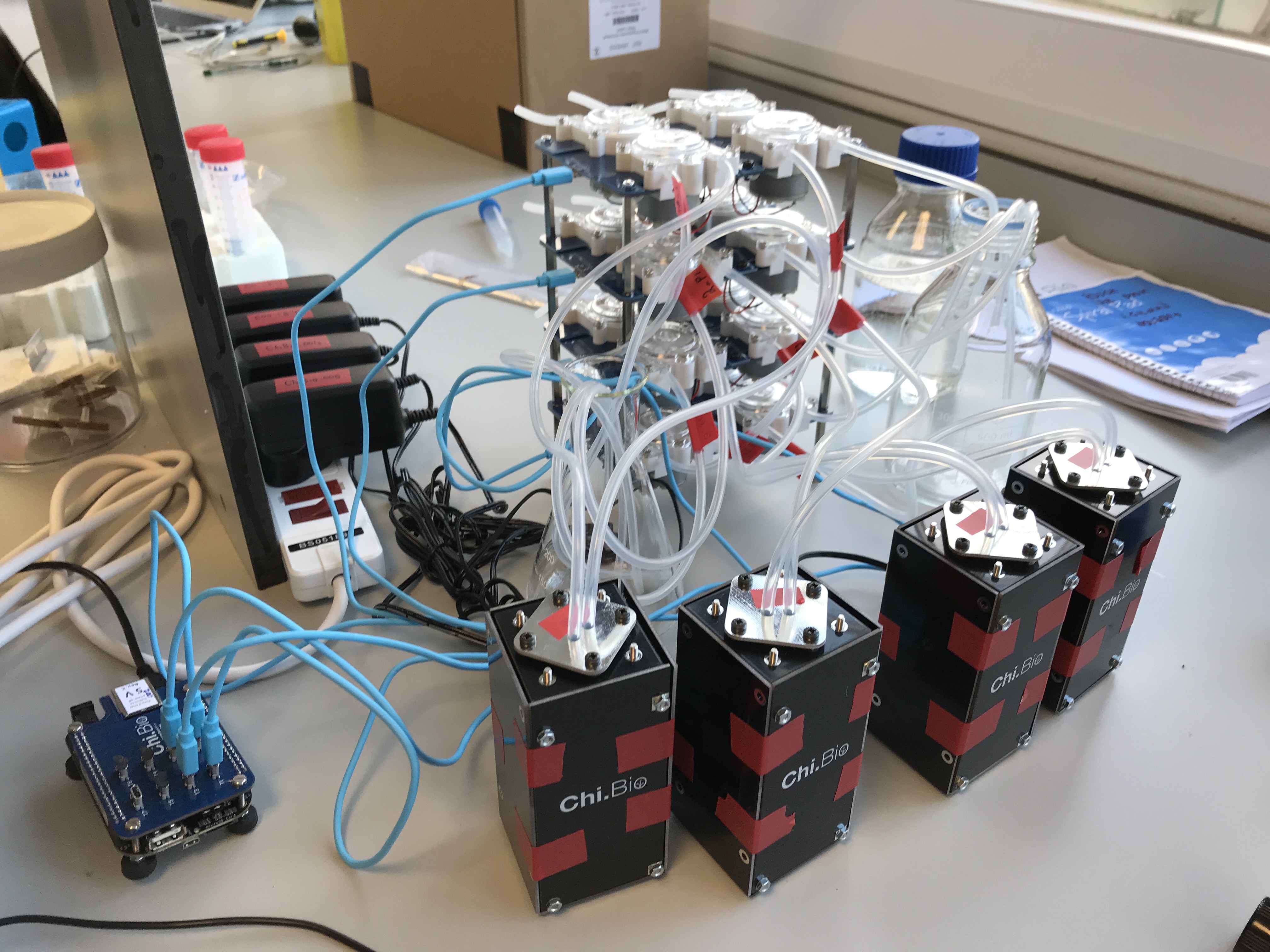
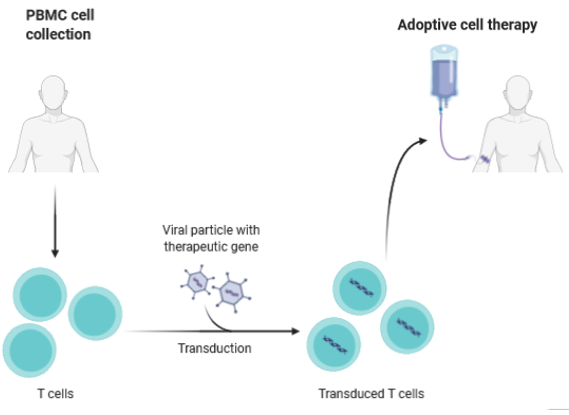
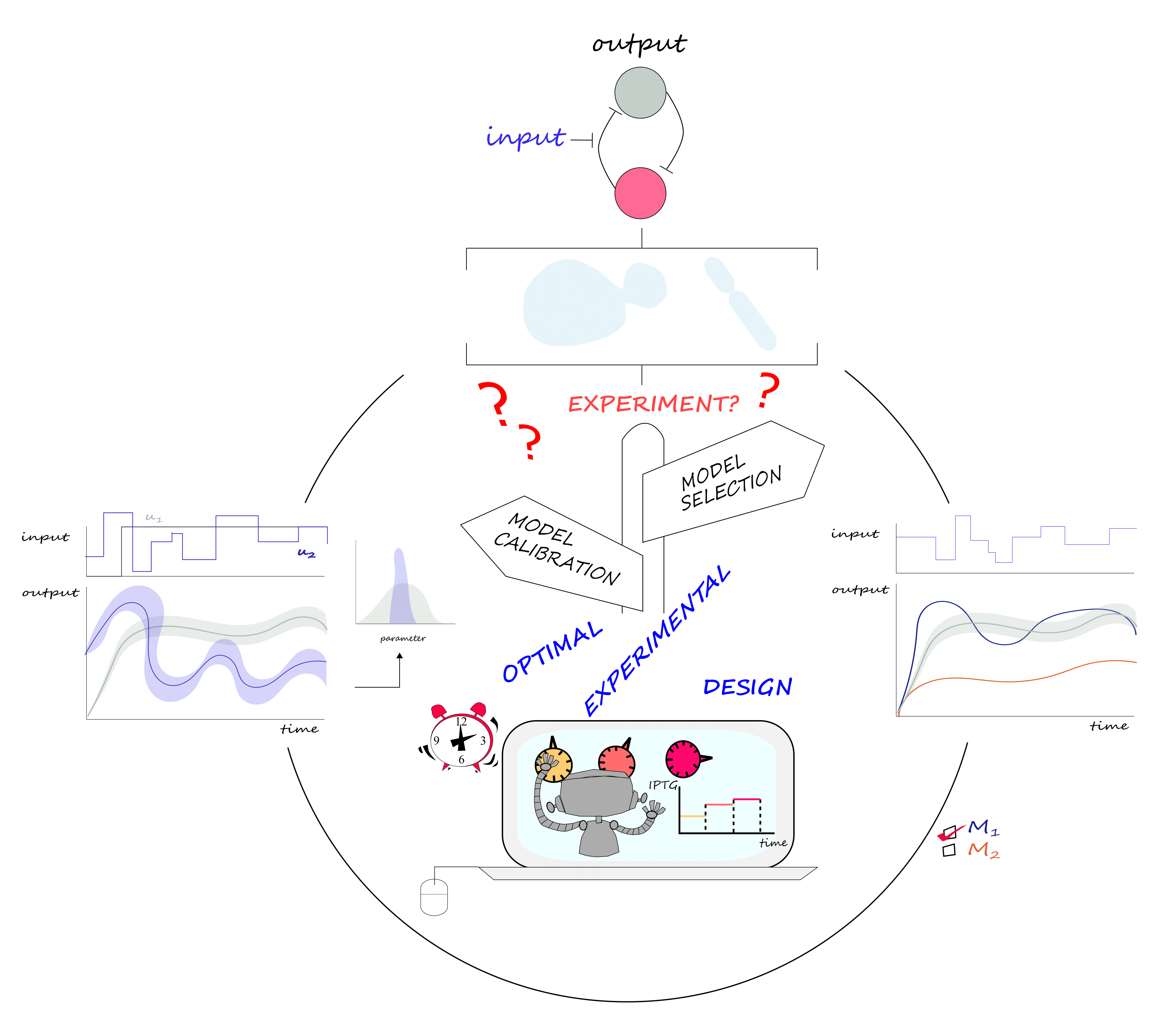
Automation of the Design-Build-Test-Learn cycle in Synthetic Biology hinges on the ability to develop mathematical models of biological parts and circuits. Modelling, however, is hampered by the nonlinear nature of biological networks and the sparsity of costly in vivo/in vitro data. We combine computational methods from engineering and experimental techniques from live sciences to streamline the development and use of mathematical models of biological systems. Optimal Experimental Design (OED), a set of statistical tools to inform the data-driven definition of experimental schemes, offers an ideal framework to design experimental protocols that balance the trade-off between information extracted from an experiment and experimental effort. Our cyber-physical platform, establishing loop between OED and microfluidics, allows a resource-effective characterisation of bimolecular networks.
The engineering of biological systems is an inherently multidimensional endeavour, involving the exploration and exploitation of complex response surfaces. However, despite this complexity, much synthetic biology research is predicated on One Factor At A Time (OFAT) experimentation – the genetic or environmental factors that affect the function of a biological system of interest are altered one at a time, whilst all other variables are held constant. Although intuitive, OFAT is inefficient, overlooks the effect of interactions between variables, and can result in the development of sub-optimal strains and processes. Design of Experiments (DoE) is an approach that aims to overcome these issues by combining multifactorial experimentation with statistical modelling
The cSynBioSys group uses DoE to inform the data-driven design and optimisation of genetic regulation systems in Saccharomyces cerevisiae, including an optogenetic transcription factor and estradiol-inducible hybrid synthetic promoters. Both systems represent non-trivial combinatorial optimisation problems; multiple transcription activation domains and photoreceptors with different characteristics must be evaluated when designing an optogenetic system, and hybrid promoter design requires selection of a core promoter and operator sequences. Multiple variants of all these parts are available, resulting in complex design spaces in which the best combination of genetic parts is not obvious. We use DoE to guide the exploration of these response surfaces, building and empirically characterising algorithmically-defined libraries of system variants and using the resulting data to build statistical models that link genotype to phenotype.
Donec ullamcorper nulla non metus auctor fringilla. Vestibulum id ligula porta felis euismod semper. Praesent commodo cursus magna, vel scelerisque nisl consectetur. Fusce dapibus, tellus ac cursus commodo.